

Younger CEOs Will Bring Remote Work Back
Plus, EEOC protects telework as a disability right despite RTO mandates

👋 Happy Tuesday! Workers in their 50s and 60s are less likely to be hybrid than any other age group, according to the latest WFH Research Survey of Working Arrangements and Attitudes. Just 20% of workers aged 50-64 have hybrid arrangements, compared to 31% of workers in their 20s and 30s. Instead, older workers are polarized—more likely to be fully on-site (66.6%) and more likely to be fully remote (13.3%). Younger workers navigate the middle ground while older workers have settled into extremes: either all in or all out.
In this week’s edition:
👔 Younger CEOs Drive Remote Comeback
🗞️ Top Flexible Work News
⚖️ EEOC Protects Telework Rights
Current Subscribers: 10,447
Please forward to colleagues and friends!
THIS WEEK’S FLEX FOCUS 🔍
Remote Work’s Comeback: Younger CEOs Will Reshape the Office

Remote work is set for a major comeback over the next decade as boomer and Gen X executives retire and are replaced by millennial and Gen Z leaders who favor flexibility, according to new research from the National Bureau of Economic Research by Nick Bloom and colleagues.
The study tracked monthly surveys of 8,000 U.S. workers throughout 2025 and found two patterns: employees at companies founded after 2015 WFH nearly twice as often as those at firms started before 1990, and when the CEO is under 30, the average WFH rate reaches 1.4 days per week compared to 1.1 days when the CEO is 60 or older.
Today’s office push is led by boomers and older Gen X executives who built their careers when desk visibility signaled commitment. Younger leaders measure contribution by delivery and results, not hours in a cubicle. As older executives retire and older firms shrink, the labor force will naturally migrate into remote-friendly organizations. Even as giants like Amazon and JPMorgan mandate five-day office returns, the structural trend points the other way. Over time, the nature of work may depend on the birth year of the person in the corner office.
FLEX WORK QUICK HITS 💥
Stay ahead of the curve with our curated roundup of the trending flexible work stories making waves right now. Here's what you need to know 👇
Fortune: Remote employees earn 12% more than in-office colleagues—not because WFH boosts pay, but because higher-paid senior employees with better negotiation leverage secured both higher wages and flexibility, San Francisco Fed study finds.
HR Executive: U.S. workers spend 223 hours annually commuting—6 unpaid workweeks worth $8,158 per employee—as MyPerfectResume analysis reveals the "invisible pay cut" of RTO mandates hitting workers who rely on secondary income to make ends meet.
GeekWire: Microsoft's 3-day RTO mandate started Feb. 23 for 50,000+ Seattle-area employees, replacing its previous hybrid policy that allowed remote work up to half the time without manager approval.
FLEXPERT INSIGHTS 🧠
Telework is a Protected Right

The Equal Employment Opportunity Commission just issued guidance that stops federal agencies from making blanket telework denials—even under Trump's RTO mandate.
The surprise move requires agencies to handle accommodation requests through individualized analysis rather than one-size-fits-all decisions, forcing compliance with the Americans with Disabilities Act. As author Dr. Gleb Tsipursky, CEO of Disaster Avoidance Experts, notes, the practical implication is that RTO policy can move quickly, but accommodation decisions require casework.
Private-sector litigation shows why this matters beyond federal agencies. When duties center on electronic systems and customer communication, physical presence often functions as a preference rather than a job requirement, and prior remote success becomes powerful evidence. For employers rushing people back to offices, treating telework accommodations as a compliance afterthought risks both legal exposure and shrinking their talent pool.
COMPANY SPOTLIGHT ✨
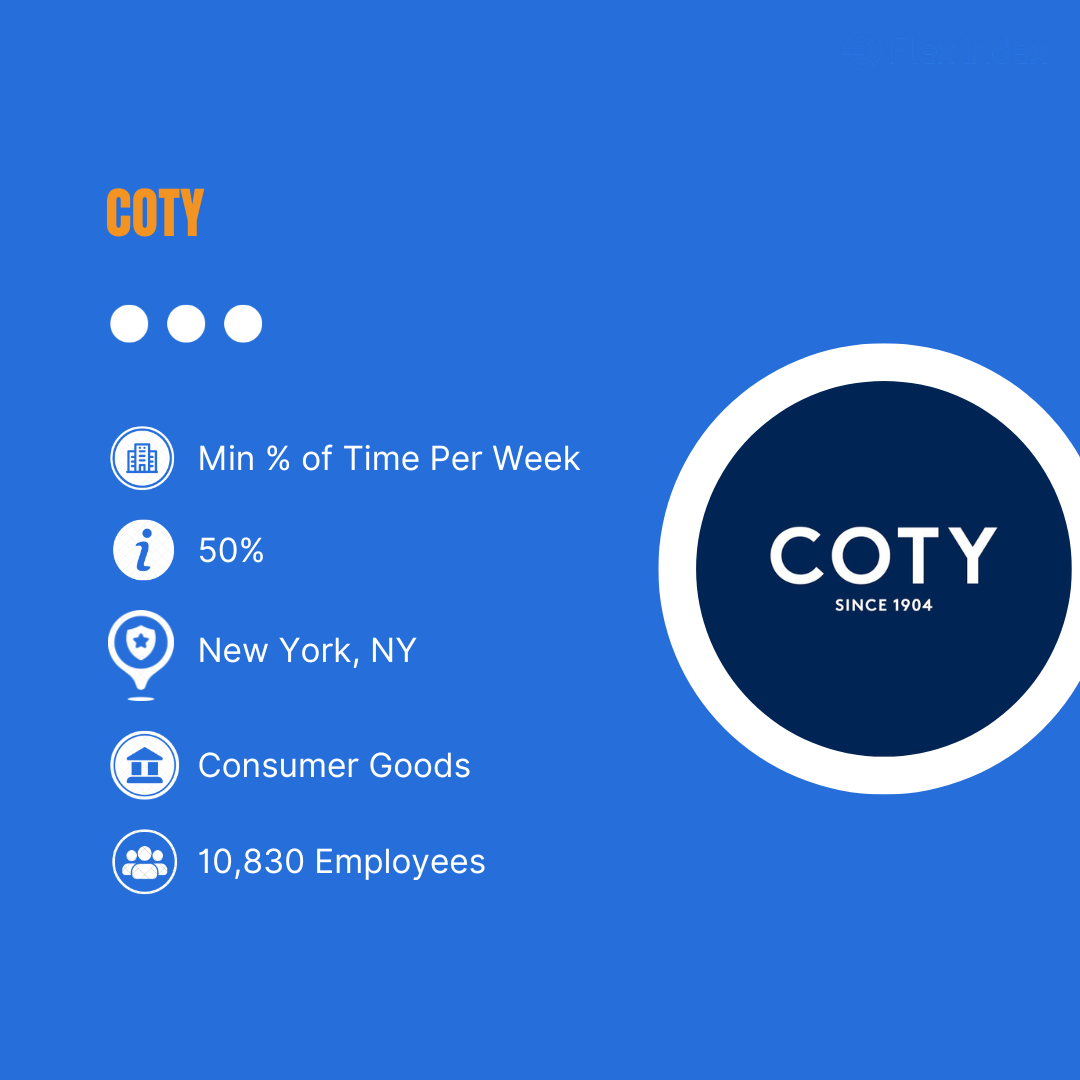
Coty Inc., established in 1904, is a leading global beauty company that manufactures, markets, and distributes fragrances, cosmetics, skin care, nail care, and both professional and retail hair care products. The company is headquartered in New York, NY, USA, and operates in over 150 countries.
Are you guys still publishing quarterly Flex Index reports?