

Synchrony Hit #1 Without Forcing RTO
Plus, the leadership blind spot costing companies more than they realize

👋 Happy Tuesday! This week marked a major shift for PNC employees as the bank’s five-day RTO mandate went into effect. Anonymous employees flooded Reddit with complaints about excessive commute times and childcare concerns, with many saying they’re leaving the company. The backlash reveals the growing divide between corporate mandates and worker expectations as PNC joins the wave of financial firms ending hybrid work.
In this week’s edition:
🏆 How Synchrony hit #1 with no office mandates
🗞️ Top Flexible Work News
🏢 Who actually owns the workplace?
Current Subscribers: 10,418
Please forward to colleagues and friends!
THIS WEEK’S FLEX FOCUS 🔍
Synchrony Tops Best Companies List with No Mandate Flex Model
“Did we learn nothing?”
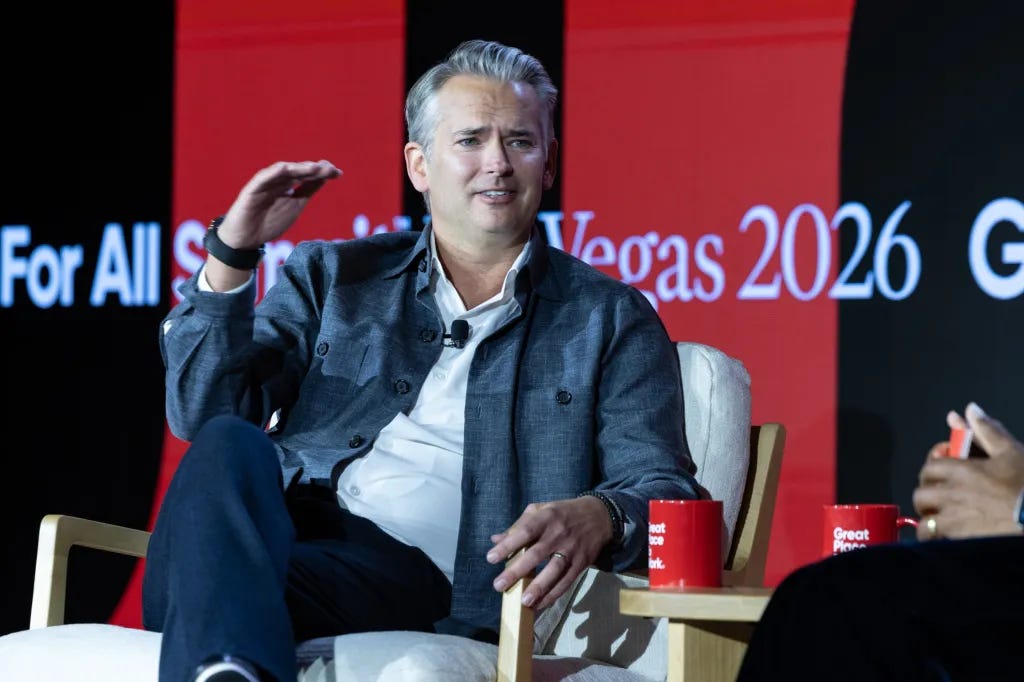
That’s the question Synchrony Financial’s CHRO has for CEOs pushing five-day returns. The company just claimed the #1 spot on Fortune’s Best Companies to Work For—the first financial services firm to top the list in 23 years—with a flex model that mandates nothing. No required office days. No badge tracking. No surveillance. Yet Synchrony’s New York hub at Bryant Park is so packed that employees sometimes struggle to find seats.
The timing is striking. While JPMorgan Chase, Goldman Sachs, and PNC Financial have all moved to five-day mandates, Synchrony doubled down on trust.
“Five days in the office, and then I’m going to check the hours and what you’re working on. But you want people motivated and engaged?” as CHRO DJ Casto put it.
Since CEO Brian Doubles committed to permanent hybrid work in 2021, the company’s earnings per share have climbed nearly fourfold, and 96 percent of employees say they have the flexibility they need.
FLEX WORK QUICK HITS 💥
Stay ahead of the curve with our curated roundup of the trending flexible work stories making waves right now. Here's what you need to know 👇
Inc.: Rising fuel prices are intensifying the RTO debate as gas could hit $7 per gallon amid the Iran crisis, forcing workers to absorb mounting commute costs.
Milwaukee Business Journal: Harley-Davidson's new CEO required white-collar employees living within 50 miles of Milwaukee headquarters to return to the office starting in April.
The Hill: Tech workers will forgo 25% of salary for remote arrangements, three to five times higher than earlier estimates.
FLEXPERT INSIGHTS 🧠
Who Actually Owns the Workplace?
The people deciding your company’s future aren’t talking about the workplace—and it’s creating a leadership blind spot. At major conferences, CFOs, CHROs, and CIOs shape strategy but rarely discuss workplace design. Meanwhile, workplace conversations happen in separate forums without them.
Phil Kirschner, who has worked across McKinsey, WeWork, JLL, and Credit Suisse, says the result is a hidden conflict between HR, IT, Finance, and Real Estate about who should own workplace strategy. “This isn’t a design issue—it’s a leadership problem,” he explains in a Work Design Studios interview.
Without executive-level ownership, companies end up “fixing the past” instead of building for the future, creating generic offices that underperform even as hybrid models reshape how work gets done.
Such a great piece as always 😊 if organisations invested in real estate, finance is tied to that. This means HR would not have a chance to argue with C level when RTO mandate is on the table.