

How Remote Work Changed Family Planning
Plus, new SWAA research reveals how firm age drives remote work rates

👋 Happy Tuesday! Ubisoft fired team lead David Michaud-Cromp after he publicly criticized the company's 5-day RTO mandate on LinkedIn, citing a Code of Conduct breach. The gaming giant joins a growing list of companies cracking down on employee dissent over RTO policies.
In this week’s edition:
👶 WFH & The Baby Boom
🗞️ Top Flexible Work News
📈 Younger Firms = More Flexibility
Current Subscribers: 10,445
Please forward to colleagues and friends!
THIS WEEK’S FLEX FOCUS 🔍
Could WFH Deliver a Baby Boom?

The US had 80,000 additional births between 2021 and 2025 when the pandemic enabled remote work, according to a new Stanford University study analyzing 19,000 workers across 38 countries. Couples working from home, even just one day a week, are more likely to conceive and plan future children than those who commute five days a week. The reason? “You can’t get pregnant by email,” says Stanford economist Nick Bloom, the study’s coauthor.
Remote work eliminated long commutes, gave parents time for school pickups and bedtime routines, and made conceiving easier. Multiple studies now suggest flexible work arrangements correlate with higher fertility rates, with 80% of women ranking flexibility as their top job benefit.
Yet the research arrives amid widespread RTO mandates from Trump (federal workers), Amazon, and JPMorgan Chase. Bloom calls the contradiction stark: “The odd thing is the current Trump-Vance administration is trying to end work from home despite pushing for higher birth rates. You can’t force couples to have kids, but it sure helps if you make it a lot easier, and working from home does that in spades.”
FLEX WORK QUICK HITS 💥
Stay ahead of the curve with our curated roundup of the trending flexible work stories making waves right now. Here's what you need to know 👇
Business Insider: Stellantis CEO justified the company's 5-day RTO mandate by pointing to Silicon Valley's "hardcore" culture, telling employees to match the intensity of AI startup engineers working full-time in the office.
Forbes: Workers would accept an 8% pay cut to maintain flexible work, with flexibility now the top factor for job seekers and the second most common reason employees stay.
FOX 11: California legislators introduced bipartisan bill to make remote work permanent for state employees—directly challenging Gov. Newsom's July 1 mandate requiring 4 days in office, as a state audit estimates telework could save $225 million annually.
FLEXPERT INSIGHTS 🧠
Young Firms = More Flexibility
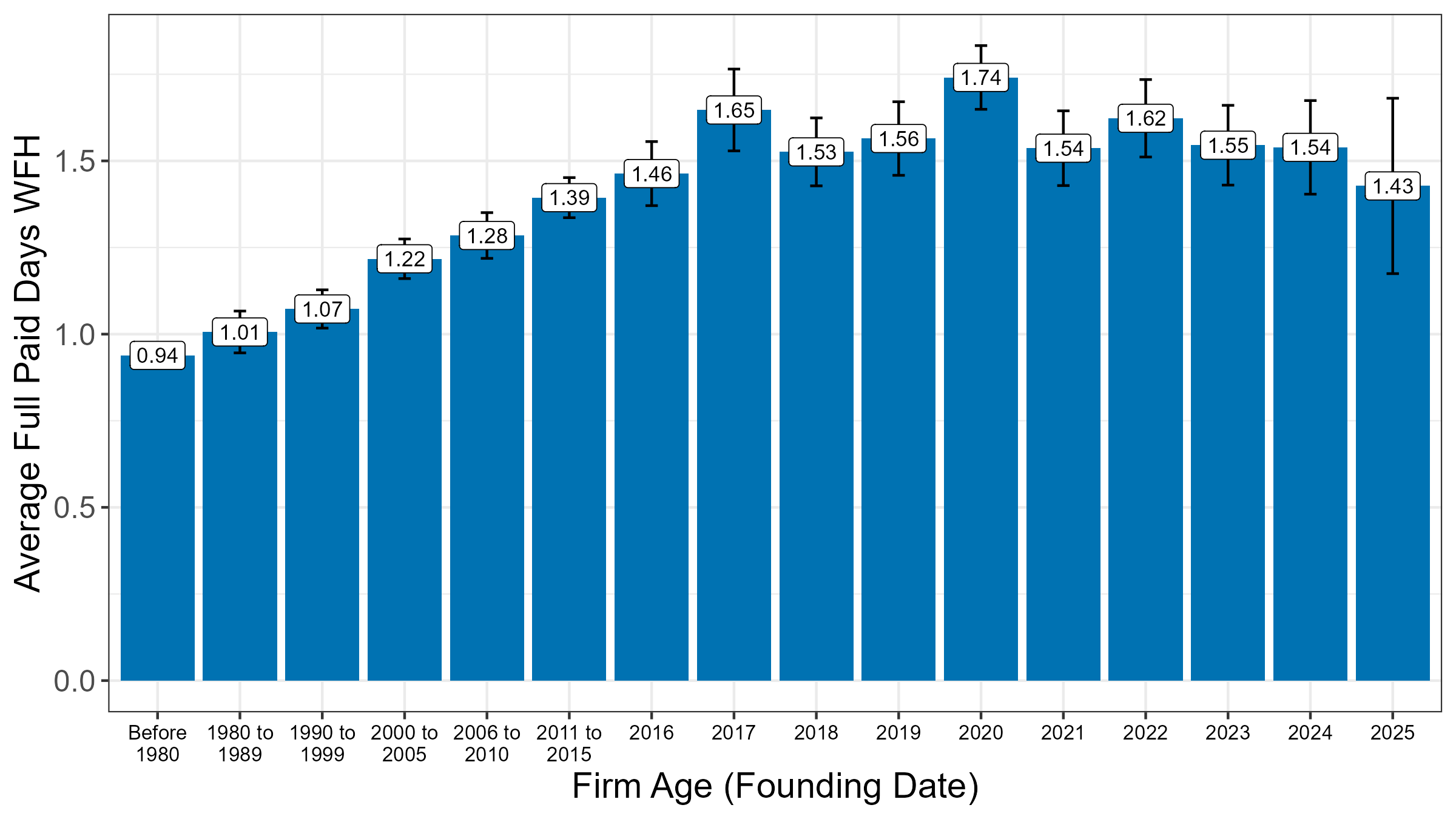
Younger firms founded since 2015 have about 50% higher work-from-home rates than firms founded before 1990, according to the latest WFH Research data from the Survey of Working Arrangements and Attitudes (SWAA). Companies that started during the 2020 lockdown have the highest remote rates of all—they built themselves up fully remote and kept it that way.
The pattern reveals something critical: younger firms have malleable structures that allow remote work, while older firms built their practices around in-person collaboration before technology enabled alternatives. As the economy evolves and older firms get replaced by startups led by younger CEOs, work from home will likely rise long-term.
COMPANY SPOTLIGHT ✨
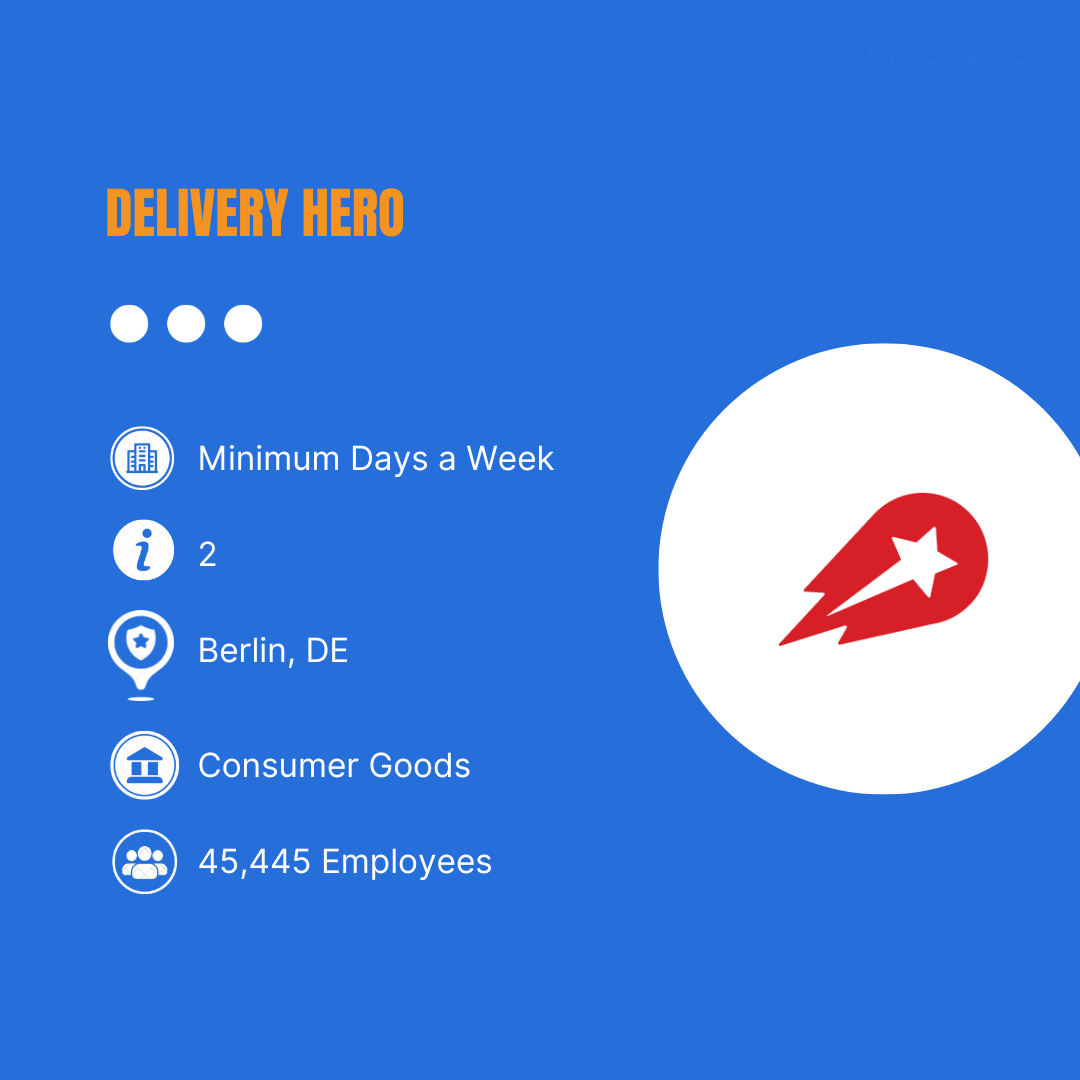
Delivery Hero, founded in 2011, is a leading global online food ordering and delivery marketplace committed to providing an amazing, fast, and easy delivery experience. The company operates in over 70 countries across four continents and connects customers with a wide array of restaurants and shops, operating 982 Dmarts globally.